
If you’ve ever heard the words “I’m bored!” five minutes after your child put down a tablet, you’re definitely not alone. In a world where screens are always nearby, finding ways to keep kids entertained without technology can sometimes feel like a challenge.
But here’s the wonderful thing about children: they don’t actually need a screen to have fun. Give them a few simple supplies, a little space, and the freedom to use their imagination, and you may be surprised by what happens.
Screen-free time can become an opportunity for children to explore, create, discover, and simply be kids. And sometimes, those ordinary moments become the memories they remember most.
Let Their Imagination Build the Adventure
One of my favorite ways to encourage screen-free play is something incredibly simple: building a fort.
Give children a few blankets, pillows, and chairs, and suddenly the living room can become a castle, a campsite, a spaceship, or a secret hideaway. You might walk away for a few minutes and come back to discover that your child has created an entire imaginary world.
Once the fort is finished, the adventure doesn’t have to stop. They can bring in their favorite books, stuffed animals, or toys and spend hours playing inside their special space.
Activities like this do more than keep children busy. They encourage creativity, planning, problem-solving, and imaginative thinking.
And sometimes, the mess that comes with building that fort is completely worth it.
Turn a Blank Piece of Paper Into Anything
Another easy way to get children away from screens is to simply put paper and art supplies in front of them.
Give them crayons, colored pencils, washable markers, or paint and let their imagination take over. Instead of telling them what to draw, ask questions that get them thinking.
“What would your dream house look like?”
“If you could design your own playground, what would you put in it?”
“What would happen if dinosaurs lived in your backyard?”
There are no wrong answers. A blank piece of paper can become a family portrait, a magical kingdom, a funny monster, or an entire new world.
While children are having fun, they’re also developing creativity and fine motor skills.
Become a Little Scientist
Children are naturally curious. They want to know why things happen and what will happen if they try something different.
That’s why simple science experiments can be such a great screen-free activity. You don’t need an expensive science kit. A few basic household ingredients can turn an ordinary afternoon into an exciting learning experience.
Try a simple baking soda and vinegar experiment, see which objects float or sink, or create a homemade volcano.
The important part isn’t getting the “right” answer. Let your child make a prediction first and then see what happens. That little moment of discovery can make learning exciting.
Of course, always supervise children and choose experiments appropriate for their age.
Make Learning Feel Like Play
Sometimes children don’t even realize they’re learning—and that’s exactly what makes play so powerful.
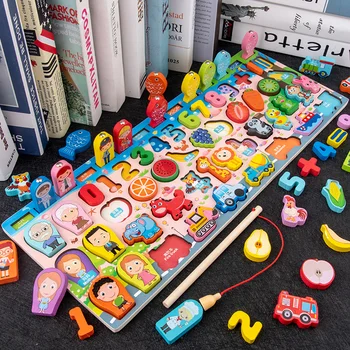
Educational toys, puzzles, building sets, counting games, matching activities, and Montessori-inspired toys can introduce children to numbers, shapes, colors, patterns, and problem-solving while they are simply having fun.
For younger children especially, hands-on activities can make early learning concepts feel natural rather than like homework.
A child who is happily sorting colors or figuring out where a puzzle piece belongs is practicing important skills without even realizing it.
That’s the kind of learning we love at Bright Tots World—learning that feels like play.
Step Outside and Explore
When everyone has been inside for too long, sometimes the best solution is simply to go outside.
Turn an ordinary walk around the yard or neighborhood into a nature adventure. Ask your child to look for a yellow flower, a smooth rock, a pinecone, a bird, or a leaf bigger than their hand.
You don’t need a fancy activity sheet. Let curiosity guide the adventure.
Children can discover different colors, textures, sounds, insects, plants, and animals while getting some fresh air and exercise at the same time.
You may even find yourself slowing down and noticing things you normally walk right past.
Let Them Help in the Kitchen
If you’ve ever tried baking with a child, you already know that it can be both wonderfully fun and just a little messy.
But that mess can come with a lot of learning.
Let your child help measure ingredients, count eggs, stir the batter, or decorate cookies. Suddenly, you’re practicing counting, measuring, following directions, and sequencing—all while making something delicious together.
And when everything is finished, you get to enjoy the results as a family.
That’s a pretty good lesson in learning and teamwork.
Turn Up the Music
Not every activity needs to be educational in an obvious way.
Sometimes kids just need to move.
Put on some music and have a family dance party. Let everyone make up a silly dance move, and then have everyone else copy it.
You might laugh more than you dance, but that’s part of the fun.
Dancing helps children develop coordination, balance, rhythm, and body awareness. More importantly, it’s a chance to let loose and enjoy being together.
Create Something With Your Hands
Play dough is another simple activity that can keep little hands busy for surprisingly long periods of time.
One minute your child might be making a pretend pizza, and the next they’re creating a dinosaur, flower, or entire imaginary town.
Ask them to make a zoo or create a pretend bakery. Let them make their own rules and see where their imagination takes them.
The squeezing, rolling, shaping, and molding also gives little hands an opportunity to practice fine motor skills.
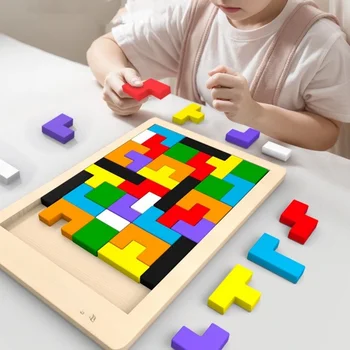
Discover the Satisfaction of a Puzzle
There is something special about watching a child finally find the missing puzzle piece.
They try one spot. It doesn’t fit.
They try another. Still wrong.
Then suddenly—click! It fits.
That little moment teaches children that sometimes solving a problem takes patience and a few tries.
Puzzles can encourage concentration, visual skills, patience, and problem-solving. And finishing one gives children that wonderful feeling of accomplishment.
Let Pretend Play Take Over
Children don’t need expensive costumes or elaborate toys to create an imaginary adventure.
A blanket can become a superhero cape. A cardboard box can become a spaceship. A chair can become a race car.
Maybe your child wants to be a veterinarian one afternoon and a restaurant owner the next.
Pretend play gives children the freedom to create their own stories and practice language, communication, creativity, and social skills.
As adults, we sometimes forget just how powerful a child’s imagination can be.
Build, Knock Down, and Build Again
Building blocks and construction toys are another fantastic way to keep children engaged without a screen.
Maybe they’ll build the tallest tower they can. Maybe they’ll create a bridge, house, castle, or imaginary city.
And yes, there’s a good chance the entire thing will eventually come crashing down.
That’s okay.
Building, experimenting, making mistakes, and trying again are all part of the learning process. Children are discovering balance, shapes, spatial relationships, and problem-solving while having fun.
Don’t Forget Family Game Night
Finally, bring everyone together for a good old-fashioned family game night.
Pull out a board game, card game, memory game, or simple matching game that’s appropriate for your child’s age.
There’s something special about sitting around a table together, laughing, cheering each other on, and occasionally hearing, “That’s not fair!”
Games teach children about taking turns, following rules, patience, strategy, counting, and good sportsmanship.
But perhaps the most important lesson is simply learning how to enjoy time together.
Finding the Balance
Of course, screen-free time doesn’t mean children can never watch television, play a game, or use a tablet. Technology is part of everyday life, and it can have benefits when used appropriately.
The goal is simply to create balance.
When children have books, art supplies, puzzles, building toys, educational activities, and opportunities to explore outside, they have plenty of alternatives to reach for when the screen goes off.
And don’t underestimate the power of joining them.
Sometimes the best screen-free activity isn’t something you buy or plan. It’s sitting on the floor and building a tower together, going outside to look for bugs, coloring at the kitchen table, or simply listening to your child tell you an imaginative story.
Those little moments may seem ordinary today, but they can become the moments your children remember tomorrow.
At Bright Tots World, we believe childhood should be filled with opportunities to play, discover, create, and learn. Screens may be part of childhood, but they certainly don’t have to be the center of it.
So the next time you hear, “I’m bored!”, don’t panic.
Smile, put down the phone, and ask:
“What should we create today?”
You might be surprised where the adventure takes you.


0 Comments